

PALLADIUM
Palladium is a soft silver-white metal that resembles platinum. It is the least dense and has the lowest melting point of the platinum group metals.
This metal also does not react with oxygen at normal temperatures (and thus does not tarnish in air). The most common use of palladium today is in catalytic converters. Research is in progress to discover ways to replace the much more expensive platinum with palladium in this application.
Palladium is one of the two metals which can be alloyed with gold to produce White gold. (Nickel can also be used.) Similar to gold, palladium can be beaten into a thin leaf form as thin as 100 nm (1/250,000 in). Palladium was discovered by William Hyde Wollaston in 1803 and was named after the asteroid Pallas, which was discovered two years earlier.
Palladium is found as a free metal in placer deposits of the Ural Mountains, Australia, Ethiopia, South and North America. However, it is commercially produced from nickel-copper deposits found in South Africa and Ontario. Of late, an increasing number of white precious metal alloys have been introduced into the jewelry marketplace in answer to industry cries for a true white counterpart to the ever-popular yellow gold. The search has been on for a workable white alloy that stays white, is hypoallergenic and priced more agreeably than platinum.
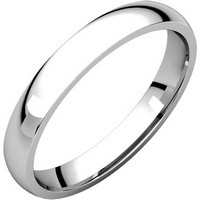
Palladium was first used for jewelry when platinum was declared a strategic metal and reserved for military use in 1939. Palladium alloys for jewelry typically contain 95% palladium and about 5% ruthenium and have trace amounts of other metals proprietary to their developers. These palladium alloys are white, noble, malleable, lightweight, hypoallergenic, and easy to finish and polish. Furthermore, they do not require rhodium plating and have desirable platinum-like setting and forming characteristics.
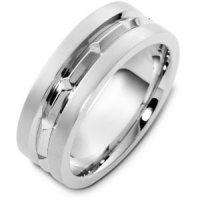
The specific gravity of palladium is close to that of 14k white gold and nearly half the weight by volume of platinum. The lightness of palladium alloys and pricing considerations make them prime candidates for use in fashionable, affordable and classically influenced jewelry designs. Palladium will stay white, never requiring the "renewed whitening" via rhodium plating white gold does.
Physical Properties of Palladium:
Melting point: 1828 degrees K
Symbol: Pd
Crystal System: Face-centered cubic crystal
Hardness: 4.75 Mohs'
Cleavage: None
Fracture: None
Specific Gravity: 10.38
Color: grayish white metallic
Luster: bright, shiny
Information
Policies


© Copyright
1995-2026 WeddingBands.com. All rights reserved